Press release —
Wickford Stroke Survivor Supports Charity to Highlight ‘Survival is Not Enough’
A stroke survivor from Wickford, is sharing their story ahead of World Stroke Day, as part of a national campaign to spotlight the fragility of the brain and the life-changing
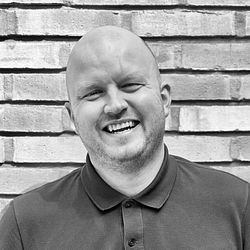
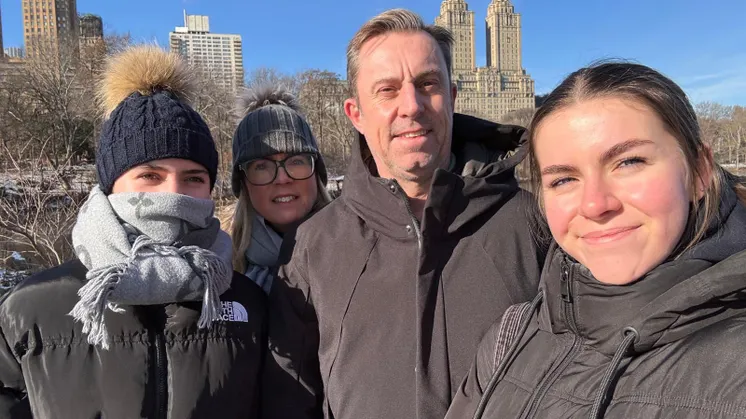
Jon, 54, experienced a stroke on 29 December 2024, which left him unable to move the left side of his body. He is sharing his story with his wife, Lisa, to raise awareness as part of the Stroke Association’s ‘Survival Is Not Enough’ campaign, highlighting the devastating impact stroke can have on survivors and their loved ones, and the importance of rehabilitation and ongoing support.
Before his stroke, Jon was Financial Director of his family’s commercial kitchen business and enjoyed an active family life with Lisa and their two teenage daughters. The stroke began with a severe headache while the couple were visiting friends. Although Lisa suspected something was wrong, Jon initially appeared to improve. Two days later, he collapsed at home and was unable to move his left side.
Jon was taken to hospital, where he received emergency treatment before being transferred to Queen’s Hospital in Romford for specialist care. As swelling in his brain worsened, he required an emergency craniectomy, an operation to remove part of his skull to relieve pressure. He was then placed in an induced coma for several days.
Following two weeks in specialist care, Jon began rehabilitation at Basildon Hospital. Concerned that he was not making the progress they had hoped for, Lisa made the difficult decision to arrange private intensive rehabilitation, involving physiotherapy, occupational therapy, neurological therapy and speech therapy.
Lisa said: “My husband – fit, strong, full of life – lying there, unable to sit properly, his left side gone, eating puréed food, tubes everywhere. It didn’t feel real. It still doesn’t, sometimes.
“I went into fight mode. This could not be Jon’s life. I wasn’t accepting it. He’s the love of my life. My everything. I wasn’t giving up on him.”
Jon has made significant progress since beginning intensive rehabilitation. Doctors had once warned that he might never sit up, stand or walk again, but he has achieved all three. He returned home in August 2025, and the family adapted their house to support his mobility and independence. He continues to work towards further recovery.
Lisa said: “We had no idea how devastating a stroke could be. You hear the word, but you don’t feel it until you’re living it. The physical impact, the mental toll, the strain it puts on every part of your life – it’s overwhelming.
“That’s why sharing Jon’s story matters so much to us now. Not just to reflect on how far he’s come, but to raise awareness of how serious and life-changing stroke can be, and how vital the right care and rehabilitation are. If telling our story helps even one person recognise the signs sooner, or pushes for better support for someone going through it, then it’s worth it.”
The family also received support from a local Stroke Association support coordinator, who provided information, advice and reassurance as they navigated the challenges of life after stroke.
In the UK, someone has a stroke every five minutes, with 1.4 million people currently living with a brain injury caused by stroke. More than 85,000 people survive a stroke every year, but recovery is only the beginning. Many face a long and gruelling journey adjusting to the trauma and rebuilding their lives, often left without the essential long-term rehabilitation and support they need.
Despite the life-changing impact of stroke, awareness of its severity and the long-term challenges survivors face remains worryingly low amongst the general public.
Despite one in four strokes happening to people of working age, a third of Brits aged 18-34 (34%) and almost a quarter of 35-44 year olds (24%) believe they’re too young to have one.
The knowledge gap extends to the impact of stroke, with almost a third (32%) unaware that it is a brain injury and nearly one in five (19%) not realising it can cause long-term difficulties with walking, talking, seeing or swallowing. Almost a quarter (22%) underestimate the road to recovery believing it takes just a few months or less.
The Stroke Association’s campaign ‘Survival is Not Enough’ aims to drive awareness of the impact of stroke and support a two-part documentary series commissioned by Channel 4, in partnership with the charity: ‘Trauma: My Broken Brain’. The series follows three young adults, Dan, Saskia and Dec, through the fight of their lives after a life-threatening stroke. ‘Trauma: My Broken Brain’ will be available to stream from Monday 26thOctober at 10pm on Channel 4.
Juliet Bouverie OBE, CEO of the Stroke Association, said: “A stroke is a devastating brain injury, leaving behind life-changing trauma. In an instant, a stroke can steal away the things that many of us take for granted, such as walking, talking, eating and living independently; the things that make you, you. This new research shows that people still don’t understand a stroke happens in the brain and wrongly believe a stroke only affects older people.
"A stroke isn't only a medical emergency from which you either die or survive, but instead the start of a long and gruelling journey to rebuilding a life. For so many stroke survivors, the fight doesn’t end when their lives are saved, yet every day survivors and their families are left traumatised and without the long-term rehabilitation and support they need. After everything a stroke takes, no-one should have to fight for essential support to recover and live a full life again.”
As part of the campaign, the Stroke Association unveiled a giant brain carved entirely from ice on London’s Southbank, creating a striking spectacle in the heart of the capital. Standing at 2.5 metres tall, the sculpture, which took 150 hours across five days to create, was designed to represent both the complexity and fragility of the human brain.
The ice brain sculpture will be in place at Southbank’s Observation Point on Monday 26th and Tuesday 27thOctober, with members of the public encouraged to stop, view the installation up close and find out more about the impact of stroke through the stroke survivors’ stories.
1.4 million people are living with a brain injury caused by stroke. Help the Stroke Association change what comes next: www.stroke.org.uk/brain
Topics
Regions
- Over 85,000 people survive a stroke every year in the UK, but surviving a stroke is just the start of a long and gruelling recovery journey.
- Mums, dads, grandparents, young people, even children – anyone can have a stroke, and its impact is traumatic.
- Brain injury, caused by a stroke, can leave survivors unable to move, see, speak or even swallow.
- The Stroke Association is the leading charity in the UK providing life-long support for all stroke survivors and their families. We provide tailored support to tens of thousands of stroke survivors each year, fund vital scientific research, and campaign to secure the best care for everyone affected by stroke.
- Anyone affected by stroke can visit stroke.org.uk or call our dedicated Stroke Support Helpline on 0303 3033 100 for information, guidance or a chat when times are tough.
About the Stroke Association