Press release —
Boston stroke survivor supports charity campaign to say “Survival is not enough!”
A stroke survivor from Boston, Lincolnshire is sharing their story ahead of World Stroke Day, as part of a national campaign to spotlight the fragility of the brain and the life-changing impact a stroke can have on people of all ages.
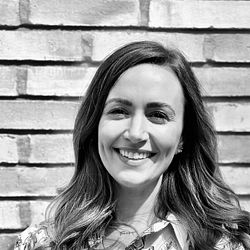
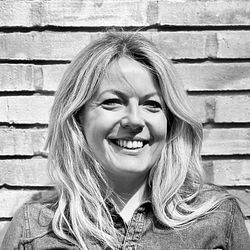
Chloe Beecham, 32, had a stroke in 2022, which was the result of a violent attack by her now ex-partner. Chloe is now raising awareness of stroke as part of the Stroke Association’s ‘Survival Is Not Enough’ campaign.
Christmas 2022 was just around the corner. Chloe and her mum, Lesley, were constantly messaging each other about Christmas shopping and making plans for Chloe to come home to Lincolnshire to celebrate with her family.
Neither of them could have imagined how quickly everything would change.
Although Chloe had been seeing an ex-partner on and off, her family knew very little about the relationship and didn't realise they were back together.
One evening, an argument turned violent. After Chloe confronted him about cheating on her, he punched her repeatedly around the head and neck. During the attack, Chloe remembers feeling what she describes as a rush of blood inside her neck.
Chloe said: "I felt...something burst. Blood rushing down my neck."
The blows caused a carotid artery dissection - a tear in one of the major arteries in her neck. A blood clot formed, cutting off blood supply to her brain.
At the time, Chloe had no idea she had a life-threatening injury. She went to bed with an ice pack, believing she simply had a bad headache. The next morning, despite feeling unwell, Chloe got up for work as normal.
Her face felt strange. Her right hand wasn't working properly. When she looked in the mirror, something didn't seem right with her eye. Still, she got in her car and drove herself to work.
By the time she arrived, she was unknowingly experiencing a major stroke. She dropped her phone without realising she couldn't grip it properly. Colleagues noticed something wasn't right. They saw her right foot dragging and her speech becoming confused.
One of Chloe's managers recognised the warning signs. Chloe said: "They realised stroke."
Instead of dismissing her symptoms because she was only 28, they acted immediately and took her to Manchester Royal Infirmary. That decision almost certainly saved her life.
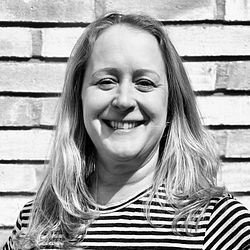
Lesley received a phone call from Chloe's boss while she was at home in Lincolnshire. Lesley said: "As soon as they told me Chloe wasn't right and described what was happening, my first thought was she'd had a stroke. You don't expect to think that about your 28-year-old daughter, but I just knew something was terribly wrong."
She immediately made the three-hour drive to Manchester. By the time she arrived, Chloe had undergone scans which revealed a devastating stroke. She had already been transferred by emergency ambulance to Salford Royal Hospital for specialist care.
Initially, Chloe was still able to move a little and answer questions - but every answer was the same: "January."
Lesley said: "It didn't matter what anyone asked, she just kept saying 'January'. Then someone asked her what her name was, and she couldn't tell them. That's when my heart just sank."
Her first night in hospital, Chloe had a second stroke and a seizure. Overnight, her speech disappeared completely. She became paralysed down the right-hand side of her body. A second MRI scan confirmed another stroke.
On Christmas Eve, Chloe was transferred closer to home so her family could be with her throughout her recovery. The months that followed were some of the hardest any of them could imagine.
Chloe had to relearn how to walk.
She had to relearn how to talk.
The stroke had left her with aphasia, affecting her ability to communicate, and even now, more than three years later, conversations can still be difficult.
Chloe said: "It was frustrating. Words just gone."
As her speech slowly returned with the help of NHS speech and language therapists, another challenge remained. Police needed Chloe's account of what had happened, but for months she simply couldn't explain it.
Gradually, she practised a handful of words over and over again until one day she managed to say: "Harry. Cheated. Phone. Stroke."
Those four words helped complete the picture of what had happened and allowed the investigation to move forward.
For Lesley, watching her daughter fight every day has been both heartbreaking and inspiring. Lesley said: "I've watched Chloe lose so much. The job she loved. Her independence. Her flat. Her car. But I've also watched her refuse to give up."
More than three years later, Chloe continues to live with the effects of her stroke. She has aphasia, epilepsy caused by scarring on her brain, weakness in her right arm and hand, and foot drop, meaning she wears a brace to help her walk.
Recovery hasn't ended and every day is still rehabilitation. But Chloe refuses to let her stroke define her.
Chloe said: "I'm still me. Keep going."
Looking back, Lesley believes Chloe's story carries an important message for everyone. Lesley said: "People think strokes only happen to older people, but they don't. Chloe was only 28. If her colleagues hadn't recognised something was wrong and acted so quickly, she might not be here today."
Chloe hopes that by sharing her experience, more people will understand that stroke can affect anyone, regardless of age. She wants young people to know the signs.
She wants people to trust their instincts when something doesn't feel right. Most of all, she wants others living with stroke to know that recovery doesn't stop when you leave hospital.
It's a journey built from countless small victories: one word, one step and one day at a time.
In the UK, someone has a stroke every five minutes, with 1.4 million people currently living with a brain injury caused by stroke. More than 85,000 people survive a stroke every year, but recovery is only the beginning. Many face a long and gruelling journey adjusting to the trauma and rebuilding their lives, often left without the essential long-term rehabilitation and support they need.
Despite the life-changing impact of stroke, awareness of its severity and the long-term challenges survivors face remains worryingly low amongst the general public.
Despite one in four strokes happening to people of working age, a third of Brits aged 18-34 (34%) and almost a quarter of 35-44 year olds (24%) believe they’re too young to have one.
The knowledge gap extends to the impact of stroke, with almost a third (32%) unaware that it is a brain injury and nearly one in five (19%) not realising it can cause long-term difficulties with walking, talking, seeing or swallowing. Almost a quarter (22%) underestimate the road to recovery believing it takes just a few months or less.
The Stroke Association’s campaign ‘Survival is Not Enough’ aims to drive awareness of the impact of stroke and support a two-part documentary series commissioned by Channel 4, in partnership with the charity: ‘Trauma: My Broken Brain’. The series follows three young adults, Dan, Saskia and Dec, through the fight of their lives after a life-threatening stroke. ‘Trauma: My Broken Brain’ will be available to stream from Monday 26th October at 10pm on Channel 4.
Juliet Bouverie OBE, CEO of the Stroke Association, said: “A stroke is a devastating brain injury, leaving behind life-changing trauma. In an instant, a stroke can steal away the things that many of us take for granted, such as walking, talking, eating and living independently; the things that make you, you. This new research shows that people still don’t understand a stroke happens in the brain and wrongly believe a stroke only affects older people.
"A stroke isn't only a medical emergency from which you either die or survive, but instead the start of a long and gruelling journey to rebuilding a life. For so many stroke survivors, the fight doesn’t end when their lives are saved, yet every day survivors and their families are left traumatised and without the long-term rehabilitation and support they need. After everything a stroke takes, no-one should have to fight for essential support to recover and live a full life again.”
As part of the campaign, the Stroke Association unveiled a giant brain carved entirely from ice on London’s Southbank, creating a striking spectacle in the heart of the capital. Standing at 2.5 metres tall, the sculpture, which took 150 hours across five days to create, was designed to represent both the complexity and fragility of the human brain.
The ice brain sculpture will be in place at Southbank’s Observation Point on Monday 26th and Tuesday 27th October, with members of the public encouraged to stop, view the installation up close and find out more about the impact of stroke through the stroke survivors’ stories.
1.4 million people are living with a brain injury caused by stroke. Help the Stroke Association change what comes next: www.stroke.org.uk/brain
ENDS
Notes to editors
Survey of 2,000 UK adults conducted by 3Gem in October 2026.
About the Stroke Association
The F.A.S.T acronym (Face, Arms, Speech, Time) is a test to quickly identify the three most common signs of stroke.
- Face weakness: Can the person smile? Has their mouth or eye drooped?
- Arm weakness: Can the person raise both arms fully and keep them there?
- Speech problems: Can the person speak clearly and understand what you say? Is their speech slurred?
- Time to call 999: if you see any one of these signs.
Over 85,000 people survive a stroke every year in the UK, but surviving a stroke is just the start of a long and gruelling recovery journey.
Mums, dads, grandparents, young people, even children – anyone can have a stroke, and its impact is traumatic.
Brain injury, caused by a stroke, can leave survivors unable to move, see, speak or even swallow.
The Stroke Association is the leading charity in the UK providing life-long support for all stroke survivors and their families. We provide tailored support to tens of thousands of stroke survivors each year, fund vital scientific research, and campaign to secure the best care for everyone affected by stroke.
Anyone affected by stroke can visit stroke.org.uk or call our dedicated Stroke Support Helpline on 0303 3033 100 for information, guidance or a chat when times are tough.
You can follow us on Facebook , Instagram, TikTok and LinkedIn
Topics
Regions
- Over 85,000 people survive a stroke every year in the UK, but surviving a stroke is just the start of a long and gruelling recovery journey.
- Mums, dads, grandparents, young people, even children – anyone can have a stroke, and its impact is traumatic.
- Brain injury, caused by a stroke, can leave survivors unable to move, see, speak or even swallow.
- The Stroke Association is the leading charity in the UK providing life-long support for all stroke survivors and their families. We provide tailored support to tens of thousands of stroke survivors each year, fund vital scientific research, and campaign to secure the best care for everyone affected by stroke.
- Anyone affected by stroke can visit stroke.org.uk or call our dedicated Stroke Support Helpline on 0303 3033 100 for information, guidance or a chat when times are tough.
About the Stroke Association