Press release —
Cornwall stroke survivor says emotional support from Stroke Association was vital to his recovery
A North Cornwall stroke survivor has told how he felt “overwhelmed” as he struggled to come to terms the emotional impact his stroke had on him.
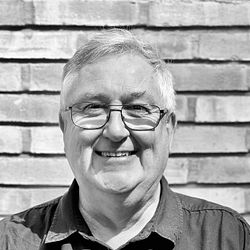
Mike Knight, who lives near St Columb Major, also experienced ongoing fatigue, weakness and difficulties with memory, concentration and thinking. But it was the emotional effects that shocked him most.
"The impact of the stroke is something I would never have been aware of," he said. "I had always bottled up my feelings and emotions. These emotions came out after the stroke and were completely alien to me."
Fortunately, Mike was referred to the Stroke Association’s Cornwall Emotional Support Service – one of the few in the country.
To mark World Stroke Day on Thursday 29 October he’s sharing his story so that other survivors in Cornwall will be aware of how the service can benefit them, even if their stroke was some time ago.
At 73, Mike was enjoying retirement with his wife, Sue. Married with grown-up children, he spent much of his time walking, taking photographs and gardening. Until late 2025, he had enjoyed excellent health and had rarely needed to visit a GP.
"I felt absolutely fit and well," says Mike. "I'd experienced very good health all my life."
Mike's health concerns began in November 2025 when he experienced the first of a series of brief episodes of what he describes as "unawareness".
These were initially diagnosed with absence seizures, then on 22 January this year, a consultant neurologist gave him a revised diagnosis of focal seizures with impaired awareness, prescribed medication and referred for further investigations. At that stage, there was no indication that he was at risk of having a stroke.
Just six days later, on 28 January, Mike was cooking at home when he collapsed. Unlike his previous seizures, he was initially aware of what was happening.
"My left arm and left leg stopped working and I collapsed onto the floor," he says. "I gradually lost my speech."
His wife immediately called an ambulance, and Mike was rushed to hospital.
Scans revealed he had suffered an ischaemic stroke caused by a blockage in an artery. The stroke had affected the right side of his brain, leading to weakness on the left side of his body.
Doctors later identified high cholesterol levels as a possible contributing factor, although there remains uncertainty over whether the stroke may have been linked to the seizures.
Within 12 hours, Mike had regained movement in his left leg and his speech returned quickly. He spent five days in hospital, where he received what he describes as excellent care. Although his's physical recovery progressed quickly, the emotional impact of stroke was far greater than he had expected.
When he returned home, he felt weak, exhausted and anxious. Once fiercely independent, he suddenly found himself relying on his wife for help with daily tasks, including getting dressed and using the toilet.
"I couldn't walk more than a few yards without being exhausted," he says. "My memory was terrible and my confidence in myself was very low."
He struggled with feelings of guilt and shame, particularly about becoming dependent on his wife.
Alongside the challenges of recovery, Mike was left with fears about the future and anxiety about the possibility of another stroke.
"The total shock of it happening, the fear of it happening again, being dependent on others and not really understanding the recovery process all had a huge impact on me," he said.
While Mike praises the treatment he received from the NHS, both he and his wife felt isolated after returning home.
A turning point came in February when a stroke nurse helped fill in many of the gaps in Mike's understanding of his condition and suggested he contact the Stroke Association's Cornwall Emotional Support Service for weekly stroke specific counselling sessions.
At the time, Mike was still waiting for a CT angiogram, which was causing him considerable anxiety. He felt frustrated that no one seemed willing or able to answer his questions.
“It wasn't until August that a consultant neurologist explained that my seizures and the stroke were unrelated. All I really needed was for someone within the NHS to tell me exactly what was wrong with me.”
Through regular counselling sessions with the Stroke Association’s counsellor, Mike gained the confidence to open up about how he was feeling and began to look at his recovery differently.
"I wasn't told what to do. I was listened to. The support helped me open my mind and have a bit more belief in myself."
The support helped Mike confront difficult emotions he had been carrying since the stroke, including feelings of self-blame.
"I was blaming myself for my illness and felt I was letting my wife down. The support I received helped me realise that this was not my fault."
As a result, Mike says he now has far greater peace of mind.
"I will always be grateful for the support I received from the Stroke Association. The listening and support I received helped ease so much of the stress and anxiety. It gave me confidence in myself again."
Today, Mike continues his recovery journey. While he still experiences some fatigue, memory difficulties and days when he does not feel at his best, he is making steady progress and remains positive about the future.
“The Stroke Association helped me immensely, but overall I feel that if the NHS had spent time explaining things to me then things would have gone a lot more smoothly,” said Mike.
“I feel that the NHS system or failure thereof, were major contributors to my anxiety and stress. I must emphasise that the individuals within the NHS service were excellent, it's the system itself.”
Jacqui Cuthbert, the charity’s associate director for the South West and Channel Islands, said the impact of stroke on mental health was huge.
“Stroke survivors tell us that they and their families need support after they are discharged home and the enormity of what has happened hits them,” said Jacqui. “Often this has severe consequences to their mental health and wellbeing.
“They feel frightened, anxious, confused and shocked. They worry about having another stroke and do not know who or where to turn to for help. This can slow recovery drastically after a stroke, bring on depression and even contribute to hospital readmission.
“Family members are catapulted into a role which no-one prepared them for and this can have enormous emotional repercussions. Around two thirds of carers have told us that the emotional impact of stroke was by far the most devastating to cope with.
“If you’re a stroke survivor or a carer, our Cornwall Emotional Support Service is here for you.
“One of our friendly, qualified, counsellors will talk through the challenges you’re facing, and identify what support you may need to help you rebuild life after stroke. We’ll work with you to help you come to terms with what’s happened to you.
“Our counsellors will tailor their support for your individual needs, focusing on issues such as loss and adjustment, relationships, understanding guilt and anger, and building confidence and self-esteem.”
"The rural nature of Cornwall means stroke survivors are far more at risk of isolation, with significant consequences to their mental health and wellbeing," she said.
The Cornwall Emotional Support Service was launched in 2022 and since then has supported a total of 1,184 survivors and carers in the county.
It is one of the few areas in the UK to have such a service, thanks to a bequest from the estate of Elwyn Thomas, a well-known Truro auctioneer, though as this runs out, the charity will be looking for an alternative source of funds to continue the service.
To find out more visit the Stroke Association website www.stroke.org.uk and search for Cornwall, or call the team on 01872 301 689.
Topics
Categories
Regions
- Over 85,000 people survive a stroke every year in the UK, but surviving a stroke is just the start of a long and gruelling recovery journey.
- Mums, dads, grandparents, young people, even children – anyone can have a stroke, and its impact is traumatic.
- Brain injury, caused by a stroke, can leave survivors unable to move, see, speak or even swallow.
- The Stroke Association is the leading charity in the UK providing life-long support for all stroke survivors and their families. We provide tailored support to tens of thousands of stroke survivors each year, fund vital scientific research, and campaign to secure the best care for everyone affected by stroke.
- Anyone affected by stroke can visit stroke.org.uk or call our dedicated Stroke Support Helpline on 0303 3033 100 for information, guidance or a chat when times are tough.
About the Stroke Association