Press release —
Mother of newborn Goole stroke survivor supports charity campaign to say “Survival is not enough!”
The mother of stroke survivor from Goole is sharing their story ahead of World Stroke Day, as part of a national campaign to spotlight the fragility of the brain and the life-changing impact a stroke can have on people of all ages.
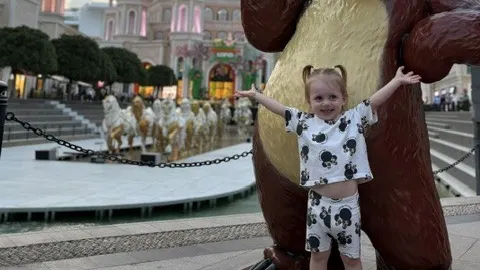
Maya Walton, had a stroke in 2024 when she was just three days old. Her Mum, Zoe, is now raising awareness of stroke as part of the Stroke Association’s ‘Survival Is Not Enough’ campaign.
In January 2024, Zoe and her partner, Louis, should have been settling into life with their newborn. Instead, they found themselves in A&E, watching their tiny baby have a seizure that lasted 30 minutes.
Maya wouldn’t settle. She was shaking as if she was shivering, despite being warm. She kept bringing up her milk. Zoe and Louis, were first-time parents, exhausted but certain something was wrong. They called 111. When Zoe struggled to keep Maya awake during the call, it was escalated to 999.
While they waited for the ambulance, Maya’s left arm began jerking, small, repetitive movements that didn’t look right. “We were terrified,” Zoe says. “I rang 999 again. I had called my mum, and when she arrived, she agreed straight away that something wasn’t right.”
Paramedics initially reassured them that Maya’s observations were fine. But Zoe trusted her instinct. “Something inside us was screaming that this wasn’t okay.” They drove to A&E.
In the waiting room, the jerking continued. They told staff they believed Maya was having seizures and were rushed through.
Despite initial tests being all clear, doctors pushed for an MRI scan. Then came the news that changed everything.
“At just three days old, our newborn baby had had a stroke” Zoe says.
“We were told about possible lifelong consequences such as visual impairment, hearing loss, mobility issues, developmental delay, epilepsy,” Zoe explains. “A nurse told us to ‘take time to grieve the life you expected.’ And we did grieve. While she was still lying in front of us.”
An MRI later showed the clots had gone. After days of treatment, failed cannulas and discussions about inserting a long line, Maya was discharged home on Levetiracetam.
But leaving hospital didn’t mean the fear ended.
Instead, Maya had seizure clinic reviews and physiotherapy for a year. At home, Zoe and Louis tried to navigate life with a child who had experienced a brain injury without specialist neurological guidance.
“We Googled. We questioned. We watched her constantly. We analysed every movement, every missed nap, every unsettled moment.”
Now approaching her third birthday, Maya is thriving. She walks, talks, laughs and dances. She has met her milestones. She is, in Zoe’s words, “fierce and funny and unbelievably resilient.”
But the trauma hasn’t disappeared.
“What people don’t see is the constant undercurrent of fear,” Zoe says. “The way we watch her sleep. The way every illness triggers panic. The way we question everything.”
“Maya sometimes struggles with big emotions, biting, head-butting, finding it hard to regulate. “Is that typical toddler behaviour? Is it neurological? Is it frustration? Is it something we’re missing? We don’t know and not knowing is exhausting.”
There is also the uncertainty about the future. Some effects of neonatal stroke may not become apparent until school age, when learning demands increase.
“Because she can walk and talk, people assume she is fine,” Zoe says. “But brain injuries are not always visible. Progress does not erase what happened.”
Before Maya’s stroke, Zoe describes herself as “a normal 25-year-old girl, excited for life with our first baby.” She worked full time, travelled, socialised and enjoyed festivals and time with friends - now life now looks very different.
She cannot return to full-time work and even though Maya attends nursery three days a week, ongoing fatigue and pain means she is only able to manage 2 and a half hours a time.
Although nearly three years have passed since Maya’s stroke, the trauma is still very much part of the family’s lives.
“The ongoing worries about her health and development, the uncertainty about her future and the struggle to access the support she needs continue to take an emotional toll on me. Time passing hasn’t made the experience disappear, and I’m still trying to navigate the impact it has had on my own mental health alongside caring for Maya.”
At the same time, Zoe describes profound gratitude. “Every day with Maya is a blessing. The small steps become huge achievements.”
They are now nearly three years on from that night in January. “It’s still as painful as the day it happened,” Zoe says. “But seeing the massive achievements Maya has been through in the two years is amazing we thought they may never happen.”
Zoe found vital support through the Stroke Association’s Childhood Stroke Support team.
“In the early days I would have regular calls with Maggie at the charity,” she says. “It was a massive help to have someone to talk to who had some understanding of what was going on. She pointed me in directions of things that can help which we didn’t get from the hospital. However, these days we still feel we haven’t received enough of the specialised support we need from specialists.”
Now Zoe and the family want people to understand that stroke can happen to anyone even a newborn baby.
“At first everything seems worst case, and that’s truly what people do share with you,” she says. “But you find ways to overcome and cope with whatever struggles might come your way. You adapt to the changed way of living better than you can imagine.”
She is endlessly proud of her daughter but many challenges still remain
“Maya is our miracle,” she says. “But pride and trauma can exist together. While Maya has made some incredible progress and we are immensely proud of her, the effects of her stroke and the impact on our family haven’t simply gone away. We’re still trying to navigate the challenges and uncertainties of childhood stroke without the support we hoped would be available.
In the UK, someone has a stroke every five minutes, with 1.4 million people currently living with a brain injury caused by stroke. More than 85,000 people survive a stroke every year, but recovery is only the beginning. Many face a long and gruelling journey adjusting to the trauma and rebuilding their lives, often left without the essential long-term rehabilitation and support they need.
Despite the life-changing impact of stroke, awareness of its severity and the long-term challenges survivors face remains worryingly low amongst the general public.
Despite one in four strokes happening to people of working age, a third of Brits aged 18-34 (34%) and almost a quarter of 35-44 year olds (24%) believe they’re too young to have one.
The knowledge gap extends to the impact of stroke, with almost a third (32%) unaware that it is a brain injury and nearly one in five (19%) not realising it can cause long-term difficulties with walking, talking, seeing or swallowing. Almost a quarter (22%) underestimate the road to recovery believing it takes just a few months or less.
The Stroke Association’s campaign ‘Survival is Not Enough’ aims to drive awareness of the impact of stroke and support a two-part documentary series commissioned by Channel 4, in partnership with the charity: ‘Trauma: My Broken Brain’. The series follows three young adults, Dan, Saskia and Dec, through the fight of their lives after a life-threatening stroke. ‘Trauma: My Broken Brain’ will be available to stream from Monday 26th October at 10pm on Channel 4.
Juliet Bouverie OBE, CEO of the Stroke Association, said: “A stroke is a devastating brain injury, leaving behind life-changing trauma. In an instant, a stroke can steal away the things that many of us take for granted, such as walking, talking, eating and living independently; the things that make you, you. This new research shows that people still don’t understand a stroke happens in the brain and wrongly believe a stroke only affects older people.
"A stroke isn't only a medical emergency from which you either die or survive, but instead the start of a long and gruelling journey to rebuilding a life. For so many stroke survivors, the fight doesn’t end when their lives are saved, yet every day survivors and their families are left traumatised and without the long-term rehabilitation and support they need. After everything a stroke takes, no-one should have to fight for essential support to recover and live a full life again.”
As part of the campaign, the Stroke Association unveiled a giant brain carved entirely from ice on London’s Southbank, creating a striking spectacle in the heart of the capital. Standing at 2.5 metres tall, the sculpture, which took 150 hours across five days to create, was designed to represent both the complexity and fragility of the human brain.
The ice brain sculpture will be in place at Southbank’s Observation Point on Monday 26th and Tuesday 27th October, with members of the public encouraged to stop, view the installation up close and find out more about the impact of stroke through the stroke survivors’ stories.
1.4 million people are living with a brain injury caused by stroke. Help the Stroke Association change what comes next: www.stroke.org.uk/brain
ENDS
Notes to editors
Survey of 2,000 UK adults conducted by 3Gem in October 2026.
About the Stroke Association
The F.A.S.T acronym (Face, Arms, Speech, Time) is a test to quickly identify the three most common signs of stroke.
- Face weakness: Can the person smile? Has their mouth or eye drooped?
- Arm weakness: Can the person raise both arms fully and keep them there?
- Speech problems: Can the person speak clearly and understand what you say? Is their speech slurred?
- Time to call 999: if you see any one of these signs.
Over 85,000 people survive a stroke every year in the UK, but surviving a stroke is just the start of a long and gruelling recovery journey.
Mums, dads, grandparents, young people, even children – anyone can have a stroke, and its impact is traumatic.
Brain injury, caused by a stroke, can leave survivors unable to move, see, speak or even swallow.
The Stroke Association is the leading charity in the UK providing life-long support for all stroke survivors and their families. We provide tailored support to tens of thousands of stroke survivors each year, fund vital scientific research, and campaign to secure the best care for everyone affected by stroke.
Anyone affected by stroke can visit stroke.org.uk or call our dedicated Stroke Support Helpline on 0303 3033 100 for information, guidance or a chat when times are tough.
You can follow us on Facebook , Instagram, TikTok and LinkedIn
Topics
Regions
- Over 85,000 people survive a stroke every year in the UK, but surviving a stroke is just the start of a long and gruelling recovery journey.
- Mums, dads, grandparents, young people, even children – anyone can have a stroke, and its impact is traumatic.
- Brain injury, caused by a stroke, can leave survivors unable to move, see, speak or even swallow.
- The Stroke Association is the leading charity in the UK providing life-long support for all stroke survivors and their families. We provide tailored support to tens of thousands of stroke survivors each year, fund vital scientific research, and campaign to secure the best care for everyone affected by stroke.
- Anyone affected by stroke can visit stroke.org.uk or call our dedicated Stroke Support Helpline on 0303 3033 100 for information, guidance or a chat when times are tough.
About the Stroke Association