Press release —
Stratford stroke survivor supports charity campaign to say “Survival is not enough!”
A stroke survivor from Stratford-upon-Avon is sharing their story ahead of World Stroke Day, as part of a national campaign to spotlight the fragility of the brain and the life-changing impact a stroke can have on people of all ages.
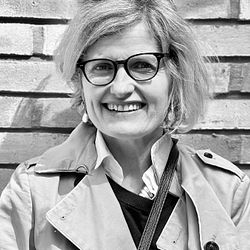
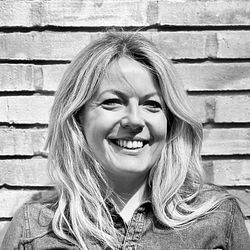
Carol Harvey-Barnes, 67, had a stroke 2023 which she puts down to living a full throttle lifestyle both personally and professionally. Carol is now raising awareness of stroke as part of the Stroke Association’s ‘Survival Is Not Enough’ campaign.
Before her stroke, Carol lived a life that could only be described as full throttle. As Head of Education at a performing arts university – and newly appointed Dean of Performing Arts across multiple colleges – she was used to long days, big decisions, and a career built on 35 years in the performing arts world.
But on 4 May 2023, everything changed in a single night.
The day before her stroke, Carol travelled from Birmingham back home to Stratford-upon-Avon, stopping to celebrate her mum’s 88th birthday. By the time she got home, she felt unusually tired.
She went to bed as normal, expecting to wake at 6.15am for work. She remembers getting up around 1am to use the toilet. But when the alarm went off at 6am, her world had changed.
“I woke up and I couldn’t move. I kept trying desperately to throw myself out of bed. I thought I was shouting for my husband, but he said he couldn’t hear me.”
Carol eventually managed to call him using her phone. When he walked in, he immediately recognised the signs:
“He said, ‘I think you’ve had a stroke, Carol,’ because he could see my face drooping.” And he called 999.
Carol was taken straight to Coventry Hospital, a decision that ended up saving her life There it was discovered that she had had a major ischaemic stroke overnight. Because no one knew exactly when it happened, she was at risk of missing the treatment window.
Coventry had top stroke consultants available that morning, and they decided to perform a thrombectomy, a highly specialised procedure to physically remove the clot from her brain.
“They told me they’d used a new technique with dye they’d never used before, and it was really successful. I was the first person they’d used it on. I was very lucky.”
She spent two weeks on the acute stroke ward. During that time, she developed pneumonia and two DVTs from being unable to move. Her left side was completely paralysed. Yet her speech remained mostly intact, even if slightly slurred.
Carol’s daughters helped arrange a place for her at Circle Rehabilitation in Edgbaston, a private facility offering intensive therapy. There she had four hours of rehab a day: physio, occupational therapy, practising everyday tasks like showering and dressing.
But emotionally, she struggled to process what had happened.
One moment stands out for Carol: “I remember sitting at a Summer Fete in my wheelchair, looking around, and thinking, ‘This is now my community.’ There was nothing wrong with that, but it felt so alien to who I am. It made me cry.”
She stayed there for four weeks, though staff wanted her to stay longer. Community rehab continued at home, then she funded private physio once the NHS sessions ended.
Her determination paid off. Just three months after her stroke, on 1 August 2023, Carol returned to her senior leadership role. While her employer was flexible and allowed her to work remotely, fatigue hit hard and after a year it became clear that returning to what she did before was no longer realistic.
“Oh, too quick,” she says now. “I never should have done it.”We came to a good agreement. They’d looked after me well, but it was time to stop.”
Still, Carol remains deeply involved in her field. She now works as an examiner, moderator, and lead examiner, assessing students in graded exams and dance.
“I actually love doing that,” she smiles. “I get to watch lovely students online.”
Carol’s life today looks different – but in many ways, it’s still full.
She exercises regularly: Pilates, Zumba Gold, walking. She’s changed her diet. She keeps in touch with her consultant, who told her, “Live your life – just get on with it.”
Carol is also exploring ways to give back including advocacy work and possibly teaching dance classes for people with impairments.
“I’d love to help others. I know what I’ve had to do to improve my mobility.”
While Carol has made remarkable physical progress, she wants people to understand the invisible impacts of stroke.
“People say, ‘Oh, you look fantastic,’ but they don’t see what’s going on behind the scenes. There’s a lot more behind it.”
Fatigue was one of the hardest challenges: “Fatigue is not just being tired. Every bit of energy comes out of your body. Resting doesn’t fix it.”
Emotionally, navigating her “new self” has taken time.
“You’re still the same person inside, but you have to navigate a new you. And it’s nice if people accept that.”
Carol knows she’s been fortunate to have an exceptional family support network while she is now proud to speak up to raise awareness.
“There is nothing to be ashamed of with stroke. You don’t know what’s around the corner. Anyone can have a stroke.”
She wants people to understand the importance of rapid treatment, the power of thrombectomy, and the reality that young, active people can and do have strokes.
Above all, she wants other stroke survivors to know they’re not alone.
“I’ve been given a chance to live again. It could have been so much worse. Now, I’m just embracing who I am now.”
In the UK, someone has a stroke every five minutes, with 1.4 million people currently living with a brain injury caused by stroke. More than 85,000 people survive a stroke every year, but recovery is only the beginning. Many face a long and gruelling journey adjusting to the trauma and rebuilding their lives, often left without the essential long-term rehabilitation and support they need.
Despite the life-changing impact of stroke, awareness of its severity and the long-term challenges survivors face remains worryingly low amongst the general public.
Despite one in four strokes happening to people of working age, a third of Brits aged 18-34 (34%) and almost a quarter of 35-44 year olds (24%) believe they’re too young to have one.
The knowledge gap extends to the impact of stroke, with almost a third (32%) unaware that it is a brain injury and nearly one in five (19%) not realising it can cause long-term difficulties with walking, talking, seeing or swallowing. Almost a quarter (22%) underestimate the road to recovery believing it takes just a few months or less.
The Stroke Association’s campaign ‘Survival is Not Enough’ aims to drive awareness of the impact of stroke and support a two-part documentary series commissioned by Channel 4, in partnership with the charity: ‘Trauma: My Broken Brain’. The series follows three young adults, Dan, Saskia and Dec, through the fight of their lives after a life-threatening stroke. ‘Trauma: My Broken Brain’ will be available to stream from Monday 26th October at 10pm on Channel 4.
Juliet Bouverie OBE, CEO of the Stroke Association, said: “A stroke is a devastating brain injury, leaving behind life-changing trauma. In an instant, a stroke can steal away the things that many of us take for granted, such as walking, talking, eating and living independently; the things that make you, you. This new research shows that people still don’t understand a stroke happens in the brain and wrongly believe a stroke only affects older people.
"A stroke isn't only a medical emergency from which you either die or survive, but instead the start of a long and gruelling journey to rebuilding a life. For so many stroke survivors, the fight doesn’t end when their lives are saved, yet every day survivors and their families are left traumatised and without the long-term rehabilitation and support they need. After everything a stroke takes, no-one should have to fight for essential support to recover and live a full life again.”
As part of the campaign, the Stroke Association unveiled a giant brain carved entirely from ice on London’s Southbank, creating a striking spectacle in the heart of the capital. Standing at 2.5 metres tall, the sculpture, which took 150 hours across five days to create, was designed to represent both the complexity and fragility of the human brain.
The ice brain sculpture will be in place at Southbank’s Observation Point on Monday 26th and Tuesday 27th October, with members of the public encouraged to stop, view the installation up close and find out more about the impact of stroke through the stroke survivors’ stories.
1.4 million people are living with a brain injury caused by stroke. Help the Stroke Association change what comes next: www.stroke.org.uk/brain
ENDS
Notes to editors
Survey of 2,000 UK adults conducted by 3Gem in October 2026.
About the Stroke Association
The F.A.S.T acronym (Face, Arms, Speech, Time) is a test to quickly identify the three most common signs of stroke.
- Face weakness: Can the person smile? Has their mouth or eye drooped?
- Arm weakness: Can the person raise both arms fully and keep them there?
- Speech problems: Can the person speak clearly and understand what you say? Is their speech slurred?
- Time to call 999: if you see any one of these signs.
Over 85,000 people survive a stroke every year in the UK, but surviving a stroke is just the start of a long and gruelling recovery journey.
Mums, dads, grandparents, young people, even children – anyone can have a stroke, and its impact is traumatic.
Brain injury, caused by a stroke, can leave survivors unable to move, see, speak or even swallow.
The Stroke Association is the leading charity in the UK providing life-long support for all stroke survivors and their families. We provide tailored support to tens of thousands of stroke survivors each year, fund vital scientific research, and campaign to secure the best care for everyone affected by stroke.
Anyone affected by stroke can visit stroke.org.uk or call our dedicated Stroke Support Helpline on 0303 3033 100 for information, guidance or a chat when times are tough.
You can follow us on Facebook , Instagram, TikTok and LinkedIn
Topics
Regions
- Over 85,000 people survive a stroke every year in the UK, but surviving a stroke is just the start of a long and gruelling recovery journey.
- Mums, dads, grandparents, young people, even children – anyone can have a stroke, and its impact is traumatic.
- Brain injury, caused by a stroke, can leave survivors unable to move, see, speak or even swallow.
- The Stroke Association is the leading charity in the UK providing life-long support for all stroke survivors and their families. We provide tailored support to tens of thousands of stroke survivors each year, fund vital scientific research, and campaign to secure the best care for everyone affected by stroke.
- Anyone affected by stroke can visit stroke.org.uk or call our dedicated Stroke Support Helpline on 0303 3033 100 for information, guidance or a chat when times are tough.
About the Stroke Association