Press release —
Wisbech Stroke Survivor Supports Charity to Highlight ‘Survival is Not Enough’
A stroke survivor from Wisbech, is sharing their story ahead of World Stroke Day, as part of a national campaign to spotlight the fragility of the brain and the life-changing
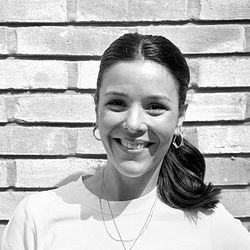
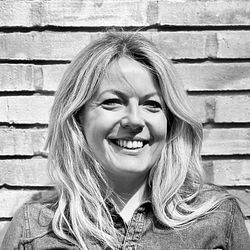
Priscilla, 48, had a stroke aged just 42 in April 2019, which left her with right-sided weakness and aphasia, a condition that affects communication. She is sharing her experience as part of the Stroke Association’s ‘Survival Is Not Enough’ campaign, highlighting how stroke can change lives in an instant and have lasting effects on independence, confidence and family life.
Before her stroke, Priscilla was a primary school teacher with ambitions to progress into senior leadership. She was attending an interview for an Assistant Headteacher position when she suddenly lost consciousness and was rushed to Addenbrooke’s Hospital. Placed in a coma to stabilise her condition, Priscilla woke several days later unable to speak or move her body.
The stroke turned her life upside down. Now supported by her husband, Emmanuel, who is her full-time carer, Priscilla continues to navigate the physical and communication challenges of life after stroke. Her condition has affected her independence and changed how she experiences family life, but she remains determined to rebuild her confidence and help others understand the impact of stroke at a younger age.
Priscilla said: “I never expected I would have a stroke. I was healthy, happy, and at my prime - I was going about life as normal.”
Reflecting on the challenges of recovery, Priscilla said: “I was so frightened and had no idea what my life would be like. I couldn’t move, walk or even talk – I felt so alone. Over the years it took everything out of me – but now I’m slowly feeling like I can be myself.
“My life has changed beyond belief. I am still the same woman, but very different. I have a physical disability – the weakness down one side of my body makes every task difficult, my speech condition makes speaking, thinking, reading and writing really complex – but I’m stronger and feeling like I’m becoming a better person.”
Despite the lasting effects of her stroke, Priscilla is grateful for the support of her husband and four children and is determined to use her experience to help others recognise the seriousness of stroke and understand its impact beyond the initial emergency.
Priscilla said: “My children and husband are my world, they’ve stuck by me and although it’s been a long six years, I’m ready to raise awareness of this cruel condition. I want more people to understand what stroke is, and how a stroke can make someone feel. I am a miracle.”
In the UK, someone has a stroke every five minutes, with 1.4 million people currently living with a brain injury caused by stroke. More than 85,000 people survive a stroke every year, but recovery is only the beginning. Many face a long and gruelling journey adjusting to the trauma and rebuilding their lives, often left without the essential long-term rehabilitation and support they need.
Despite the life-changing impact of stroke, awareness of its severity and the long-term challenges survivors face remains worryingly low amongst the general public.
Despite one in four strokes happening to people of working age, a third of Brits aged 18-34 (34%) and almost a quarter of 35-44 year olds (24%) believe they’re too young to have one.
The knowledge gap extends to the impact of stroke, with almost a third (32%) unaware that it is a brain injury and nearly one in five (19%) not realising it can cause long-term difficulties with walking, talking, seeing or swallowing. Almost a quarter (22%) underestimate the road to recovery believing it takes just a few months or less.
The Stroke Association’s campaign ‘Survival is Not Enough’ aims to drive awareness of the impact of stroke and support a two-part documentary series commissioned by Channel 4, in partnership with the charity: ‘Trauma: My Broken Brain’. The series follows three young adults, Dan, Saskia and Dec, through the fight of their lives after a life-threatening stroke. ‘Trauma: My Broken Brain’ will be available to stream from Monday 26th October at 10pm on Channel 4.
Juliet Bouverie OBE, CEO of the Stroke Association, said: “A stroke is a devastating brain injury, leaving behind life-changing trauma. In an instant, a stroke can steal away the things that many of us take for granted, such as walking, talking, eating and living independently; the things that make you, you. This new research shows that people still don’t understand a stroke happens in the brain and wrongly believe a stroke only affects older people.
"A stroke isn't only a medical emergency from which you either die or survive, but instead the start of a long and gruelling journey to rebuilding a life. For so many stroke survivors, the fight doesn’t end when their lives are saved, yet every day survivors and their families are left traumatised and without the long-term rehabilitation and support they need. After everything a stroke takes, no-one should have to fight for essential support to recover and live a full life again.”
As part of the campaign, the Stroke Association unveiled a giant brain carved entirely from ice on London’s Southbank, creating a striking spectacle in the heart of the capital. Standing at 2.5 metres tall, the sculpture, which took 150 hours across five days to create, was designed to represent both the complexity and fragility of the human brain.
The ice brain sculpture will be in place at Southbank’s Observation Point on Monday 26th and Tuesday 27thOctober, with members of the public encouraged to stop, view the installation up close and find out more about the impact of stroke through the stroke survivors’ stories.
1.4 million people are living with a brain injury caused by stroke. Help the Stroke Association change what comes next: www.stroke.org.uk/brain
Topics
Regions
- Over 85,000 people survive a stroke every year in the UK, but surviving a stroke is just the start of a long and gruelling recovery journey.
- Mums, dads, grandparents, young people, even children – anyone can have a stroke, and its impact is traumatic.
- Brain injury, caused by a stroke, can leave survivors unable to move, see, speak or even swallow.
- The Stroke Association is the leading charity in the UK providing life-long support for all stroke survivors and their families. We provide tailored support to tens of thousands of stroke survivors each year, fund vital scientific research, and campaign to secure the best care for everyone affected by stroke.
- Anyone affected by stroke can visit stroke.org.uk or call our dedicated Stroke Support Helpline on 0303 3033 100 for information, guidance or a chat when times are tough.
About the Stroke Association