Press release —
Yeovil stroke survivor backs charity’s call that ‘survival is not enough’
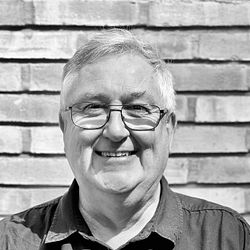
A Yeovil man who had a stroke aged 36 is sharing his story for World Stroke Day on Thursday 29 October, as part of a national campaign to spotlight the fragility of the brain and the life-changing impact a stroke can have on people of all ages.
Steve D’Arcy is raising awareness of stroke as part of the Stroke Association’s ‘Survival Is Not Enough’ campaign.
Steve was far from what most people would think of as someone at risk of having a stroke.
He was a happily married, dad-of-one, he played football and was training to run a marathon.
But in January 2019, Steve’s life changed completely. An ischaemic stroke left the former gaming retail store deputy manager unable to walk and speak.
With years of hard work and determination, Steve has regained his speech and some of his mobility. He continues to battle fatigue, memory problems and right-sided weakness in his arm and leg, which makes everyday tasks challenging.
Steve spotted the initial warning signs of a stroke when he woke one morning to find that his right hand felt numb, as if it had been slept on, and the feeling didn’t return.
Steve said: “It was like a mini alarm went off in my head. I got out of bed and went to the bathroom. My legs felt a bit weird as well, like they’d been slept on.
“I noticed in the mirror that my face had dropped. A few of my family members have medical backgrounds, so I knew the signs of a stroke. But I didn’t believe it. I was 36 years old at the time and I thought, ‘Nah, there’s no way’.”
An MRI scan showed that Steve had had an ischaemic stroke, for which he received a clot-busting drug treatment.
“My wife and her mum were there, looking at me with a lot of concern in their eyes. I remember thinking I can’t wait to tell them that I’m fine. But when I tried to talk, I couldn’t talk. When I tried to move, I couldn’t move. That numbness and fear that runs through you when something big happens hit me then, big time.”
Steve received rehabilitation at South Petherton Community Hospital in Somerset for two months, where he relearned to walk and talk.
When he returned home, his life had changed completely. He found incredible support and solace in his wife Kerry and his daughter Sophie, who was only nine at that time.
“I rang up the Stroke Association when I got home, and they talked me through some of the questions I had. I explored more to do with stroke on the website.
“No one else around me had had a stroke, and it seemed like it was a taboo subject. It was a lifeline to be able to talk to someone else who understood it.”
Since then, Steve has been a regular supporter for the charity, and his fundraising has topped £5,000.
Gaming has also played an important part in helping him adapt to life post stroke, both physically and emotionally, and he’s adapted to using a games consol with one hand and his chin.
“Stroke is like a nightmare that you live. It stays with you. My arm and leg mobility can improve, but it can’t get better. As much as people smile on the outside, stroke is always there.
“I want to help people to be aware that anyone at any age can have a stroke. I want to get that awareness out there as far as possible.”
In the UK, someone has a stroke every five minutes
In the UK, someone has a stroke every five minutes, with 1.4 million people currently living with a brain injury caused by stroke. More than 85,000 people survive a stroke every year, but recovery is only the beginning. Many face a long and gruelling journey adjusting to the trauma and rebuilding their lives, often left without the essential long-term rehabilitation and support they need.
Despite the life-changing impact of stroke, awareness of its severity and the long-term challenges survivors face remains worryingly low amongst the general public.
Despite one in four strokes happening to people of working age, a third of Brits aged 18-34 (34%) and almost a quarter of 35-44 year olds (24%) believe they’re too young to have one.
The knowledge gap extends to the impact of stroke, with almost a third (32%) unaware that it is a brain injury and nearly one in five (19%) not realising it can cause long-term difficulties with walking, talking, seeing or swallowing. Almost a quarter (22%) underestimate the road to recovery believing it takes just a few months or less.
The Stroke Association’s campaign ‘Survival is Not Enough’ aims to drive awareness of the impact of stroke and support a two-part documentary series commissioned by Channel 4, in partnership with the charity: ‘Trauma: My Broken Brain’. The series follows three young adults, Dan, Saskia and Dec, through the fight of their lives after a life-threatening stroke. ‘Trauma: My Broken Brain’ is available to stream on Channel 4.
Jacqui Cuthbert, the Stroke Association’s associate director for the South West and Channel Islands, said: “This new research shows that people still don’t understand a stroke happens in the brain and wrongly believe a stroke only affects older people.
"A stroke isn't only a medical emergency from which you either die or survive, but instead the start of a long and gruelling journey to rebuilding a life.”
1.4 million people are living with a brain injury caused by stroke. Help the Stroke Association change what comes next: www.stroke.org.uk/brain
Topics
Categories
Regions
- Over 85,000 people survive a stroke every year in the UK, but surviving a stroke is just the start of a long and gruelling recovery journey.
- Mums, dads, grandparents, young people, even children – anyone can have a stroke, and its impact is traumatic.
- Brain injury, caused by a stroke, can leave survivors unable to move, see, speak or even swallow.
- The Stroke Association is the leading charity in the UK providing life-long support for all stroke survivors and their families. We provide tailored support to tens of thousands of stroke survivors each year, fund vital scientific research, and campaign to secure the best care for everyone affected by stroke.
- Anyone affected by stroke can visit stroke.org.uk or call our dedicated Stroke Support Helpline on 0303 3033 100 for information, guidance or a chat when times are tough.
About the Stroke Association