Press release —
Young Runcorn stroke survivor supports charity campaign to say “Survival is not enough!”
A stroke survivor from Runcorn is sharing their story ahead of World Stroke Day, as part of a national campaign to spotlight the fragility of the brain and the life-changing impact a stroke can have on people of all ages.
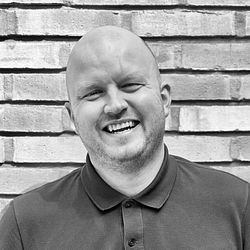
Liam Hillyer was just 28, a successful musician and a dad of three when had a stroke. Liam is now raising awareness of stroke as part of the Stroke Association’s ‘Survival Is Not Enough’campaign.
A dad of three young children, a musician who had travelled the world playing gigs and someone who had always been fiercely independent, Liam never imagined that a stroke could happen to him.
But one Wednesday night, while walking between two gigs in Liverpool, Liam suddenly knew something was very wrong.
Liam describes the sensation as being like a drill going off inside his ear. At the same time, his right arm and leg began to feel as though they were moving away from him.
Somehow, despite struggling to walk and carry his guitar and equipment, he made it back to his car. By that time, the world was spinning. He started vomiting, the noise in his head became louder and his speech deteriorated further. His wife, who was on the phone, called an ambulance.
Liam had had an ischaemic stroke on the right side of his brain, affecting the right side of his body. At just 28, he was the youngest person on the ward who had had a stroke. Before then, Liam knew very little about stroke.
Following his stroke, Liam learned that he had several risk factors, including high blood pressure and high cholesterol. He had also been under significant stress while moving house and had travelled long-haul to Thailand shortly before his stroke.
Liam spent six days in hospital before returning home. He had been determined to get home to his family.
“I was very independent beforehand and it feels like overnight, it just was stripped away from me.” His wife had to help him get out of bed, get to the toilet and shower. “It was very weird because I was so independent. I never relied on anyone to do anything for me.”
For Liam, one of the hardest parts was that mentally he still felt like the same person. He knew how to play the guitar. He knew how to write. He knew how to drive. He knew how to do all the things he had done before but physically, his body wasn't always able to follow. “It's weird, so weird, but it is what it is.”
The stroke affected his balance, coordination, strength and dexterity. His right hand, which had always been his dominant hand, became stiff and difficult to control. His speech was affected, and he struggled with his singing voice.
For a musician, the impact was profound. Before his stroke, Liam would have rated his guitar playing as a 10. Now, he says he's around a five or six. “Mentally, I know how to play it, but physically I struggle to play it and that's what's more annoying.”
Liam’s physiotherapists have encouraged him to keep playing because using the guitar gives him a reason to move his hand and work on his dexterity. “It's good to be in a situation where you need to do something with your hand. It does help.”
For around three or four weeks after his stroke, he struggled to walk. He would practise by walking backwards and forwards around his kitchen. Now he can walk, but he has learned not to rush. “I can walk, but as I said, it's not pretty.”
Eight months later, he was still nowhere near being able to do the job he had done before. “I was very unaccepting of it all and naive.” Liam describes his life as being divided into “pre-Liam and post-Liam, it was as if one Liam died and a new one came.”
There have been times when Liam has felt like a burden to his family. His youngest child was just four months old when he had his stroke, and suddenly his wife was caring for three young children as well as Liam. “I was like a fourth child.”
His family rallied around him, with his wife, mum and mother-in-law helping during the early months and although family life has been difficult, Liam says his children have also been his motivation.
“I don't want them to see Daddy being on the couch, being by himself and feeling sad for himself.”
Liam has also received support from the Stroke Association during his recovery. His support worker, Alison, regularly checked in with him, particularly during the first few months when he was struggling to come to terms with what had happened.
When Liam and his family were struggling financially because he was unable to work, Alison provided hardship support, including shopping vouchers. She also helped his eldest son understand more about stroke by working with his school to raise awareness.
Now Liam wants to focus on being a good husband and dad, looking after himself and continuing his recovery. “The blessing in disguise with a lot of this is that I've got time to spend with the kids and my wife. I've got this new relationship with them now, which is good.”
Liam is also using his experience to help others. He has started sharing his stroke journey on social media and has spoken about the things he has learned since his stroke. “If my experience and my own feelings can help someone else, I'm happy to do that.” And there is one message he wants people to understand above all else. Stroke can happen to anyone. “I think it can happen to anyone, any age, any walk of life.”
Above all, Liam wants people to give themselves time. “I think just give yourself time as well. That's the main thing. If it takes a week, if it takes a month, if it takes a couple of years, it's still time and it's still making progression.”
Liam is still recovering. There are still days when his body doesn't do what he wants it to. He still can't play his guitar the way he once could, and he doesn't know exactly what the future will look like but he knows he has come a long way.
He has gone from needing help to get out of bed to travelling to London, driving again, playing his guitar and spending more time with his children. He has discovered a resilience he didn't know he had. “I feel very much like the resilience is probably the strongest and the most positive part.”
Overall now, It takes as long as it takes.”
In the UK, someone has a stroke every five minutes, with 1.4 million people currently living with a brain injury caused by stroke. More than 85,000 people survive a stroke every year, but recovery is only the beginning. Many face a long and gruelling journey adjusting to the trauma and rebuilding their lives, often left without the essential long-term rehabilitation and support they need.
Despite the life-changing impact of stroke, awareness of its severity and the long-term challenges survivors face remains worryingly low amongst the general public.
Despite one in four strokes happening to people of working age, a third of Brits aged 18-34 (34%) and almost a quarter of 35-44 year olds (24%) believe they’re too young to have one.
The knowledge gap extends to the impact of stroke, with almost a third (32%) unaware that it is a brain injury and nearly one in five (19%) not realising it can cause long-term difficulties with walking, talking, seeing or swallowing. Almost a quarter (22%) underestimate the road to recovery believing it takes just a few months or less.
The Stroke Association’s campaign ‘Survival is Not Enough’ aims to drive awareness of the impact of stroke and support a two-part documentary series commissioned by Channel 4, in partnership with the charity: ‘Trauma: My Broken Brain’. The series follows three young adults, Dan, Saskia and Dec, through the fight of their lives after a life-threatening stroke. ‘Trauma: My Broken Brain’ will be available to stream from Monday 26th October at 10pm on Channel 4.
Juliet Bouverie OBE, CEO of the Stroke Association, said: “A stroke is a devastating brain injury, leaving behind life-changing trauma. In an instant, a stroke can steal away the things that many of us take for granted, such as walking, talking, eating and living independently; the things that make you, you. This new research shows that people still don’t understand a stroke happens in the brain and wrongly believe a stroke only affects older people.
"A stroke isn't only a medical emergency from which you either die or survive, but instead the start of a long and gruelling journey to rebuilding a life. For so many stroke survivors, the fight doesn’t end when their lives are saved, yet every day survivors and their families are left traumatised and without the long-term rehabilitation and support they need. After everything a stroke takes, no-one should have to fight for essential support to recover and live a full life again.”
As part of the campaign, the Stroke Association unveiled a giant brain carved entirely from ice on London’s Southbank, creating a striking spectacle in the heart of the capital. Standing at 2.5 metres tall, the sculpture, which took 150 hours across five days to create, was designed to represent both the complexity and fragility of the human brain.
The ice brain sculpture will be in place at Southbank’s Observation Point on Monday 26th and Tuesday 27th October, with members of the public encouraged to stop, view the installation up close and find out more about the impact of stroke through the stroke survivors’ stories.
1.4 million people are living with a brain injury caused by stroke. Help the Stroke Association change what comes next: www.stroke.org.uk/brain
ENDS
Notes to editors
Survey of 2,000 UK adults conducted by 3Gem in October 2026.
About the Stroke Association
The F.A.S.T acronym (Face, Arms, Speech, Time) is a test to quickly identify the three most common signs of stroke.
- Face weakness: Can the person smile? Has their mouth or eye drooped?
- Arm weakness: Can the person raise both arms fully and keep them there?
- Speech problems: Can the person speak clearly and understand what you say? Is their speech slurred?
- Time to call 999: if you see any one of these signs.
Over 85,000 people survive a stroke every year in the UK, but surviving a stroke is just the start of a long and gruelling recovery journey.
Mums, dads, grandparents, young people, even children – anyone can have a stroke, and its impact is traumatic.
Brain injury, caused by a stroke, can leave survivors unable to move, see, speak or even swallow.
The Stroke Association is the leading charity in the UK providing life-long support for all stroke survivors and their families. We provide tailored support to tens of thousands of stroke survivors each year, fund vital scientific research, and campaign to secure the best care for everyone affected by stroke.
Anyone affected by stroke can visit stroke.org.uk or call our dedicated Stroke Support Helpline on 0303 3033 100 for information, guidance or a chat when times are tough.
You can follow us on Facebook , Instagram, TikTok and LinkedIn
Topics
Regions
- Over 85,000 people survive a stroke every year in the UK, but surviving a stroke is just the start of a long and gruelling recovery journey.
- Mums, dads, grandparents, young people, even children – anyone can have a stroke, and its impact is traumatic.
- Brain injury, caused by a stroke, can leave survivors unable to move, see, speak or even swallow.
- The Stroke Association is the leading charity in the UK providing life-long support for all stroke survivors and their families. We provide tailored support to tens of thousands of stroke survivors each year, fund vital scientific research, and campaign to secure the best care for everyone affected by stroke.
- Anyone affected by stroke can visit stroke.org.uk or call our dedicated Stroke Support Helpline on 0303 3033 100 for information, guidance or a chat when times are tough.
About the Stroke Association