Press release —
Gravesend stroke survivor supports charity’s call that ‘survival is not enough’
A stroke survivor from Gravesend is sharing their story ahead of World Stroke Day, as part of a national campaign to spotlight the fragility of the brain and the life-changing impact a stroke can have on people of all ages.
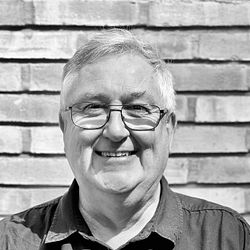
John Caphane, 50, had a stroke at home in earlier this year. He is raising awareness of stroke as part of the Stroke Association’s ‘Survival Is Not Enough’ campaign.
When John felt his arm begin to move uncontrollably one morning in April, he knew something wasn’t right. Within seconds, his life changed forever.
“I was sitting in the garden having a coffee and a cigarette,” recalls John. “My left hand just started drifting away from my body on its own. I knew that wasn’t normal.”
Moments later, his phone slipped from his hand. “That’s when panic kicked in. I tried to stand up, and I knew instantly I was having a stroke.”
John’s stroke struck on the morning of 27 April 2026, just days after returning to work following a period of ill health.
He had recently been diagnosed with prostate cancer and was still processing the loss of his father. “It had all piled up,” he says. “Emotionally, I was already in a difficult place.”
As his symptoms worsened, John struggled to call for help. Using his remaining strength, he forced himself indoors. “I shouted to my wife, ‘Call 999 something’s horribly wrong.’ I was losing control of my entire left side.”
Within minutes, he was rushed to hospital, where doctors confirmed he had suffered a haemorrhagic stroke. “Everything happened so quickly, but I was lucky. I got help fast.”
In the days that followed, John faced the full reality of stroke. “I couldn’t walk. I couldn’t hold a cup. I couldn’t even button my shirt,” he says. “You suddenly realise how much you take for granted.”
The loss of independence hit hard.
“I’m an active person – sports, family, work. To think I might not be able to live the life I had before…it broke me.”
At his lowest point, John admits he struggled to cope. “I had suicidal thoughts in those early days,” he says honestly. “I thought, how can I live like this? How can I put this burden on my family?”
But everything changed with a small sign of recovery. “On the third day, I felt movement in my toes,” he says. “That moment gave me hope.”
After two weeks in hospital, John began intensive rehabilitation, relearning everyday tasks step by step. “Walking five metres to the bathroom felt like climbing a mountain,” he says. “But every little step mattered.”
With the support of physiotherapists, occupational therapists and his family, John slowly rebuilt his strength and today he can walk independently again.
“My leg has come on well, but my arm is still weak,” he explains. “That’s the hardest part now, but I’m working on it every day.”
Throughout his recovery, support from the Stroke Association’s North Kent stroke recovery service has played a vital role. “They helped me understand what I was going through,” John says. “One conversation completely changed my mindset.”
A Stroke Association support coordinator helped John reframe his experience. “Fran said to me, ‘John, a stroke is a brain injury. You need to accept that.’ That stayed with me.”
For John, this realisation was transformative. “I’d been too hard on myself, thinking I should recover faster,” he says. “But understanding that my brain needed time helped me focus on getting better.”
Beyond emotional support, practical help made a difference too – including advice, regular check-ins and even supermarket vouchers during a difficult financial period. “It came exactly when we needed it,” John says. “Every bit of support matters.”
Now recovering at home with his wife Donna and their sons Ivan, Jayden, Kayden and Levyn, John says his perspective on life has completely changed. “You don’t think it will happen to you,” he says. “But it can, at any time, to anyone.”
He has quit smoking completely since the day of his stroke and is determined to prioritise his health moving forward. “If you’re given a second chance, you have to take it,” he says.
Although he is not yet back at work, John hopes to return when medically cleared later this year. In the meantime, his focus is clear: recovery, family, and raising awareness.
John wants people to understand the urgency of stroke. “When people say act FAST - an acronym to recognise stroke symptoms standing for ‘Face, Arms, Speech, Time’ - they really mean fast,” he stresses. “Seconds matter.”
In the UK, someone has a stroke every five minutes
In the UK, someone has a stroke every five minutes, with 1.4 million people currently living with a brain injury caused by stroke. More than 85,000 people survive a stroke every year, but recovery is only the beginning. Many face a long and gruelling journey adjusting to the trauma and rebuilding their lives, often left without the essential long-term rehabilitation and support they need.
Despite the life-changing impact of stroke, awareness of its severity and the long-term challenges survivors face remains worryingly low amongst the general public.
Despite one in four strokes happening to people of working age, a third of Brits aged 18-34 (34%) and almost a quarter of 35-44 year olds (24%) believe they’re too young to have one.
The knowledge gap extends to the impact of stroke, with almost a third (32%) unaware that it is a brain injury and nearly one in five (19%) not realising it can cause long-term difficulties with walking, talking, seeing or swallowing. Almost a quarter (22%) underestimate the road to recovery believing it takes just a few months or less.
The Stroke Association’s campaign ‘Survival is Not Enough’ aims to drive awareness of the impact of stroke and support a two-part documentary series commissioned by Channel 4, in partnership with the charity: ‘Trauma: My Broken Brain’. The series follows three young adults, Dan, Saskia and Dec, through the fight of their lives after a life-threatening stroke. ‘Trauma: My Broken Brain’ is available to stream on Channel 4.
Nick O’Donohue, the Stroke Association’s South East associate director, said: “This new research shows that people still don’t understand a stroke happens in the brain and wrongly believe a stroke only affects older people.
"A stroke isn't only a medical emergency from which you either die or survive, but instead the start of a long and gruelling journey to rebuilding a life.”
1.4 million people are living with a brain injury caused by stroke. Help the Stroke Association change what comes next: www.stroke.org.uk/brain
Topics
Categories
Regions
- Over 85,000 people survive a stroke every year in the UK, but surviving a stroke is just the start of a long and gruelling recovery journey.
- Mums, dads, grandparents, young people, even children – anyone can have a stroke, and its impact is traumatic.
- Brain injury, caused by a stroke, can leave survivors unable to move, see, speak or even swallow.
- The Stroke Association is the leading charity in the UK providing life-long support for all stroke survivors and their families. We provide tailored support to tens of thousands of stroke survivors each year, fund vital scientific research, and campaign to secure the best care for everyone affected by stroke.
- Anyone affected by stroke can visit stroke.org.uk or call our dedicated Stroke Support Helpline on 0303 3033 100 for information, guidance or a chat when times are tough.
About the Stroke Association